High-rise buildings, bullet trains, and spending power. These things characterize life in an ever-changing China, and Nanjing is no exception. Dominic Phinn, General Manager of the European Chamber of Commerce Nanjing branch, gives in this text a glance into this city's exponential and on-going growth.
Three decades of constant and rapid economic growth and the resulting wave of change that has taken place in China has long been a focus of attention throughout the world. For Chinese and foreign residents alike, these changes are plain to see in Nanjing as in any other Chinese city.
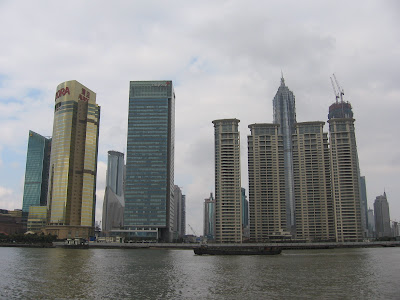
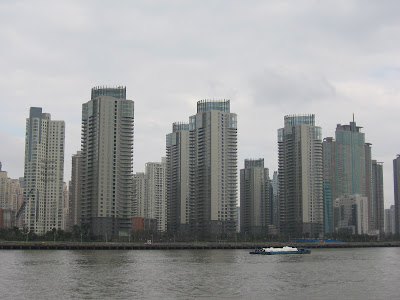
Fresh building projects contributing to Nanjing's high rise-dominated skyline, the huge increase in cars and buses coinciding with the disappearance of bicycles, the new shopping malls and huge, bright billboards advertising the newest Nokia phone or the most sophisticated foreign fragrance all provide some of the most obvious indications of the transitory nature of China today. However, although these kinds of changes are among the most apparent, they are by no means the biggest.
Celebrating the milestone of bringing in its 100th member in Nanjing, The European Chamber of Commerce in China has taken a step back and tried to gain some perspective on how Nanjing as a key city in China, has been changed by China's quarter of a century of economic growth.
Infrastructure. There has been an explosion of infrastructural development with new construction or improvements of expressways, rail lines, ports and airports, telecommunications and buildings in Nanjing. The cranes and scaffolding that have become as commonplace in the city as the buildings themselves over the last few decades have meant that in March 2004 there were 1.300 high rise buildings in Nanjing (buildings with 30 stories or more). The growth continued into 2007, and now the number of high rise buildings which have been completed or approved count more than 2.000. Nanjing's growth as a city of crucial importance on the Yangtze River Delta and the need to connect the central business district to the suburbs has transformed the city from one in 1996 which had 357 km of bridges, to one now boasting more than 1.239 km.
Foreign trade and investment. By 2006, the amount of foreign investment in Nanjing had reached $14 billion. There are now 97 projects in Nanjing from 55 compagnies which are among the Fortune 500. The increase in foreign-invested entreprises in Nanjing is the reason for this colossal figure. In 1996, there were 438 foreign-invested compagnies in Nanjing, and now, just over ten years later, there are 1.556 in and around the city. And they're producing at increasing rates. As one example, the total production capacity of two European Chamber member compagnies based in Nanjing -LG Phillips and BASF YPC- exceeds 600.000 tons.
Standarts of living. The increase in foreign trade, much of which is represented by EUCCC member compagnies, now accounts for more than 40 percent of Nanjing GDP and has contributed to a huge increase in resident's standarts in living and spending power. A walk around almost any part of Nanjing demonstrates that this increase in wealth is obvious; in fact, it's almost impossible to ignore when faced with the thousands of choices for clothes, music, food, shoes and jewelry. In 1996, the monthly income of Nanjing's urban residents was less than 500 RMB a month. In 2004, it has risen to 900 RMB. Now, in 2007, the average income has exceeded 1.600 RMB.
The change in lifestyle for foreigners is not so easily measured, but is still plain to see. In 1996, there were only seven restaurants serving Western food. Now, there are endless options for dining, dancing and drinking, with countless western restaurants, cafes and bars addingto the range of Chinese cuisine and entertainment.
As an exceptionally prosperous city, Nanjing has attracted vast numbers of new residents over the last decade. People have flocked to Nanjing to take advantage of the plentiful work opportunities and the city lifestyle available in Nanjing. In 1995, the city had a population of 5,2 million. In 2004, the population has risen to 5,5 million. Now, the population has passed the 6 million mark: an increase of 800.000 in ten years.
Nanjing, the traditional capital of one of the world's largest and oldest countries, has, like so many other cities in China, undergone a profound transformation during the past quarter-century. From the point of view of Nanjing's foreign business comunity, the continued growth of the economy, complimented by warmth and welcome from the Nanjing locals, means that althouht the road ahead may be one that is unpredictable, it will certainly be one that is guaranteed to be exciting, fascinating and enjoyable.
This text comes from the "Map magazine, February 2007 Issue 60".
 Arrivée à Shanghai et promenade en bateau sur la rivière Huangpu. Des 2 côtés de la rivière, des immeubles et au niveau du Bund, des batîments plus anciens de type européen. L'essentiel de la ville se situe à l'ouest de cette rivière. A l'est (Pudong New Aera) , le centre financier et de nombreux immeubles déjà construit ou en construction.